
.png
)
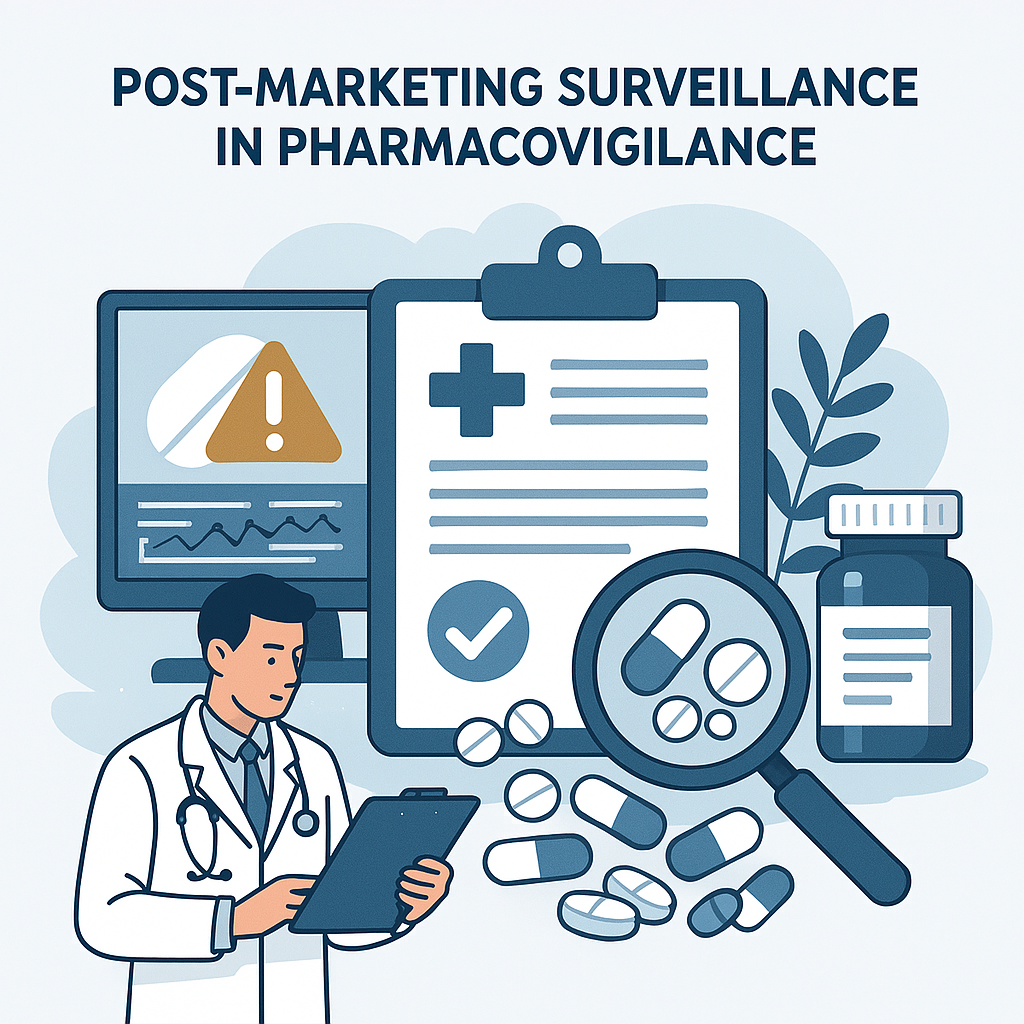
When a new drug enters the market, it brings with it both hope and uncertainty. Clinical trials, despite their scientific rigor, are limited in scope — they can’t predict how a drug will behave in real-world conditions, across varied patient populations, or over extended periods of use. This is where pharmacovigilance becomes a silent yet powerful force in ensuring patient safety.
At the heart of this vigilance lies Post-Marketing Surveillance (PMS) — an ongoing, essential process that ensures a medicine’s journey doesn’t end at approval but continues with close, data-driven observation.
🧠 What is Post-Marketing Surveillance (PMS) and Why is It Necessary?
🔍 Definition:
Post-Marketing Surveillance (PMS) refers to the continuous monitoring of a drug’s safety, performance, and effectiveness after it has been launched in the market and made available to the general population.
It focuses on collecting and analysing real-world data to detect:
- Unknown or rare side effects
- Long-term safety issues
- Product quality concerns
- Patterns of off-label use
In simple terms, PMS ensures that the product remains safe, effective, and reliable throughout its commercial life, beyond the controlled environment of clinical trials.
⚖️ Why PMS Matters
Clinical trials:
- Involve limited, controlled patient groups
- Often exclude high-risk individuals or those on multiple medications
- Don’t capture long-term outcomes or rare side effects
- Take place under close, idealized monitoring
However, once a drug is on the market, it is exposed to diverse populations, different healthcare settings, and complex real-world variables like co-morbidities, lifestyle, and genetics. This shift from theory to practice is why PMS becomes essential — to ensure safety after approval is granted.
📜 Legal Requirements for PMS under New Drug and Clinical Trial Rule (NDCTR) 2019, India
✅ Pharmacovigilance System
(Refer: The Fifth Schedule of NDCTR, 2109)
Any manufacturer or importer of a new drug must establish a robust pharmacovigilance system, which must:
- Actively collect and report Adverse Drug Reactions (ADRs)
- Be managed by a qualified medical officer or trained pharmacist
- Ensure timely and accurate reporting to the Central Licensing Authority (CLA)
🔍 Types of Post-Marketing Surveillance in India (As per CDSCO Guidelines)
- PMS Studies / Observational (Non-Interventional) Studies
Also called Active Surveillance, these are scientifically designed, protocol-based studies conducted:
- With already approved drugs
- In routine clinical settings based on the physician’s discretion
- Without altering patient care or treatment plans
📌 Key Points:
- Protocol must be approved by CDSCO
- Study must follow approved prescribing information
- These are not clinical trials; clinical trial regulations don’t apply
👉 These studies generate real-time data about how a drug performs and is tolerated in wider, real-world patient populations.
- Post-Marketing Surveillance Through PSURs (Periodic Safety Update Reports)
PSURs are structured documents submitted by pharmaceutical companies to provide regulators with an updated safety profile of the drug.
📅 Submission Schedule:
- Every 6 months for the first 2 years post-approval
- Annually for the next 2 years
- Submission must be done within 30 calendar days after the reporting period ends
- SUSARs (Serious Unexpected Adverse Reactions) must be reported within 15 days.
🔧 Core Functions of Pharmacovigilance in PMS
- Adverse Drug Reaction (ADR) Reporting
Systems like EudraVigilance (EU), VAERS (USA), and PvPI (India) allow HCPs, patients, and manufacturers to report suspected adverse events. These spontaneous reports form the foundation for signal detection.
- Signal Detection & Risk Assessment
Pharmacovigilance teams use data analysis tools to detect safety “signals” — unexpected patterns or trends. These undergo further evaluation to determine if regulatory action is required.
- Benefit-Risk Re-evaluation
If new risks emerge, the overall benefit-risk profile of the drug is re-analysed. This may result in updates to product labelling, restricted indications, or in rare cases, market withdrawal.
- Risk Management Plans (RMPs)
Regulators may mandate RMPs that detail how the company will monitor, minimize, and communicate known and potential risks.
- Regulatory Compliance
Pharmacovigilance ensures full compliance with post-marketing regulatory requirements issued by authorities like CDSCO, USFDA, EMA, etc., helping companies retain licenses and avoid penalties.
🌍 Pharmacovigilance in Action: Real-World Impact
- Rofecoxib (Vioxx): Withdrawn due to increased risk of cardiovascular events discovered post-approval
- Sodium Valproate: Restricted in pregnant women after post-marketing data confirmed high teratogenic risks
These cases highlight how PMS is not just a legal formality — it’s a critical, life-saving practice.
🤝 How Vaayath Can Help
Navigating post-marketing surveillance and pharmacovigilance systems can be complex, resource-intensive, and heavily regulated.
✅ Here’s how Vaayath supports pharmaceutical companies:
- End-to-End Pharmacovigilance Services: From ADR reporting to signal detection, we offer complete lifecycle PV support.
- Regulatory-Focused PMS Planning: We help design and execute PMS protocols aligned with CDSCO, WHO, ICH, and GVP guidelines.
- PSUR Development & Submission: Accurate and timely preparation of PSURs to meet national and international timelines.
- Qualified PV Professionals: Access to experienced medical reviewers, QPPVs, and regulatory pharmacists.
- Audit-Ready Documentation: We maintain high-quality data traceability, so you’re always ready for inspections.
With Vaayath, companies can transform compliance into confidence — ensuring drugs remain safe, patients stay protected, and regulators stay informed.


Preethi Shetty
August 13, 2025Nice blog, Companies looking for pharmacovigilance document translation can choose Knowledgeworks Innovative Linguistic Solutions