
.png
)
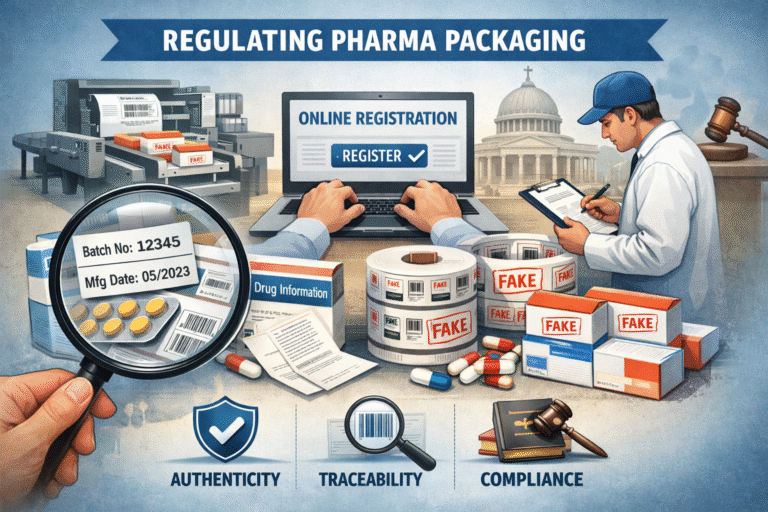
The Drugs Consultative Committee (DCC), at its 69th meeting, took up a proposal aimed at tightening control over one of the least regulated links in the pharmaceutical supply chain: the manufacturers and suppliers of printed packaging materials used for drugs. Agenda No. 5 addressed growing concerns that printed packaging — cartons, labels, foils, and inserts bearing brand names, batch details, and regulatory markings — is increasingly being diverted or misused to manufacture spurious and counterfeit drugs.
What Was Proposed
The agenda placed before DCC concerned the introduction of an online registration framework for manufacturers and suppliers of printed pharmaceutical packaging materials. Unlike drug manufacturers, printers and packaging suppliers currently operate outside any dedicated licensing or registration mechanism under the Drugs and Cosmetics Act, 1940, even though the materials they produce are integral to establishing a drug's authenticity, traceability, and regulatory compliance.
The core concern: Unregulated access to printed packaging carrying genuine brand names, holograms, and batch/license details creates a direct avenue for counterfeiters to replicate legitimate-looking drug packaging, undermining both patient safety and supply chain integrity.
DCC's Recommendation: A Sub-Committee, Not an Immediate Rule
Rather than proceeding directly to rule-making, DCC recommended constituting a sub-committee to first examine the feasibility of such a framework. This is a deliberate and legally cautious step, since any registration requirement for packaging printers would need to be tested against the existing statutory definitions of "drug" and "manufacture" under the Drugs and Cosmetics Act, 1940 — definitions that packaging material suppliers do not currently fall within.
The sub-committee has been asked to include experts from industry, including the packaging industry itself, and may also seek the opinion of a legal expert where required. Its mandate covers three specific areas:
- Necessity and feasibility — whether a registration framework for printed packaging manufacturers is actually needed and practically implementable.
- Regulatory drafting — if feasible, to propose the appropriate framework for insertion into the Drugs Rules, 1945, by way of amendment.
- Alternative safeguards — if formal registration is found not to be feasible, to recommend other measures to prevent diversion and misuse of pharmaceutical packaging materials in the manufacture and circulation of spurious and counterfeit drugs.
The sub-committee's report will be placed before DCC for further deliberation before any regulatory action is taken.
Why This Matters for the Industry
Even at this preliminary stage, the proposal signals a shift in regulatory attention toward the packaging supply chain as a distinct risk point — not just the drug manufacturing process itself. If a registration framework eventually materializes, it could bring an entirely new category of entities — printers, label manufacturers, and packaging converters serving the pharma sector — within the regulatory perimeter for the first time.
Pharmaceutical manufacturers should note that any future framework, whether registration-based or otherwise, is likely to increase due-diligence expectations around vendor selection, packaging material traceability, and supply chain documentation for their own printed packaging suppliers, regardless of when or how the final rule is framed.
What to Watch
- Constitution of the sub-committee and its composition (regulatory, industry, and legal representation)
- Whether the definitions of "drug" and "manufacture" under the 1940 Act are interpreted to permit such a framework, or whether a legislative amendment becomes necessary
- The sub-committee's report and DCC's subsequent deliberation
- Any draft amendment to the Drugs Rules, 1945, that may follow
Stay Ahead of Evolving CDSCO Regulations
Vaayath Consulting Services tracks DCC and CDSCO developments closely and helps pharmaceutical manufacturers align supply chain and vendor compliance practices with emerging regulatory expectations.

