
.png
)
4th June, 2026
Drugs Controller General of India (DCGI), issued a formal circular directing all drug manufacturers and all stakeholders to ensure they have a working pharmacovigilance (PV) system in place — one that is fully compliant with the Drugs & Cosmetics Act 1940, its Rules, and the New Drugs and Clinical Trials (NDCT) Rules 2019.
“The licensee shall have a pharmacovigilance system in place for collecting, processing and forwarding the reports to the licensing authorities for information on the adverse drug reactions emerging from the use of drugs manufactured or marketed by the licensee.”— Para 6.11, Schedule M, Drugs & Cosmetics Act, 1940
What the Circular Says
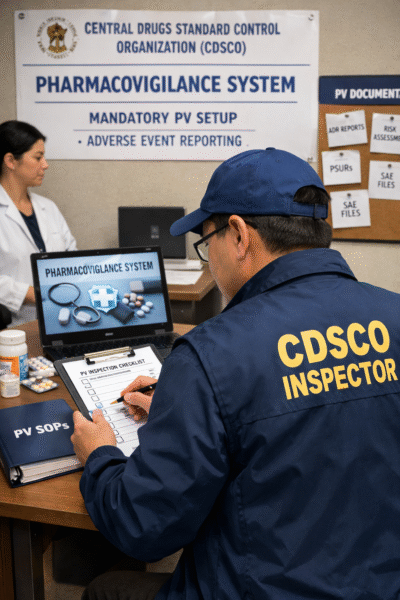
The circular references Para 6.11 of Schedule M of the Drugs & Cosmetics Act, 1940, which has always required licensees to maintain pharmacovigilance systems. The new directive from the DCGI makes clear that this obligation is being actively reinforced — and that regulatory officers from CDSCO, State Licensing Authorities (SLAs), and Union Territory administrations will verify compliance during routine inspections and other regulatory activities.
Why This Matters
Pharmacovigilance is the science and activities relating to the detection, assessment, understanding, and prevention of adverse drug reactions. A robust PV system is not just a regulatory checkbox — it is the mechanism by which harmful drug signals are identified in the real world, long after clinical trials have concluded.
For Indian drug manufacturers and marketers, the circular is a clear signal: PV compliance will no longer be treated as a background obligation. With inspectors mandated to verify these systems, companies that lack documented PV processes, trained personnel, or reporting workflows face regulatory risk.
What Licensees Should Do Now
- Conduct an internal audit of your existing pharmacovigilance infrastructure against Para 6.11 of Schedule M and NDCT Rules 2019.
- Appoint or confirm a qualified Pharmacovigilance Officer responsible for collecting, processing, and forwarding adverse drug reaction (ADR) reports.
- Establish documented Standard Operating Procedures (SOPs) for ADR collection, causality assessment, and submission to licensing authorities.
- Train field staff and medical representatives to recognise and report adverse events from healthcare professionals and patients.
- Ensure your PV system records are inspection-ready — be prepared for verification by CDSCO Zonal/Sub-Zonal officers or State Licensing Authorities.
How Vaayath Can Help You Build a Compliant PV System?
Setting up a pharmacovigilance system from scratch — or strengthening an existing one — can be a complex undertaking for drug manufacturers, especially smaller licensees navigating Schedule M obligations for the first time. This is where Vaayath steps in.
Vaayath is a specialised regulatory and pharmacovigilance consulting firm with deep expertise in Indian drug regulations. From system design to documentation, Vaayath offers end-to-end support to help licensees meet the requirements laid out in Para 6.11 of Schedule M and the NDCT Rules 2019 — and stay inspection-ready at all times.
- PV system design and gap assessment tailored to your product portfolio
- SOP development for ADR collection, causality assessment, and regulatory reporting
- Qualified Person for Pharmacovigilance (QPPV) support and outsourced PV officer services
- Periodic Safety Update Reports (PSURs) and signal detection support
- Inspection readiness audits and mock CDSCO inspection preparedness
With CDSCO inspectors now mandated to verify PV systems during routine visits, there is no better time to partner with Vaayath and ensure your pharmacovigilance infrastructure is robust, documented, and audit-proof.

